 248-250-8937
 519-999-9723
 +1 844 686-0671
In many shops, every machine treats the part as if it were new. Each operation begins by re-establishing alignment, finding zero, and redefining position. That repetition feels normal, but it quietly introduces variation.
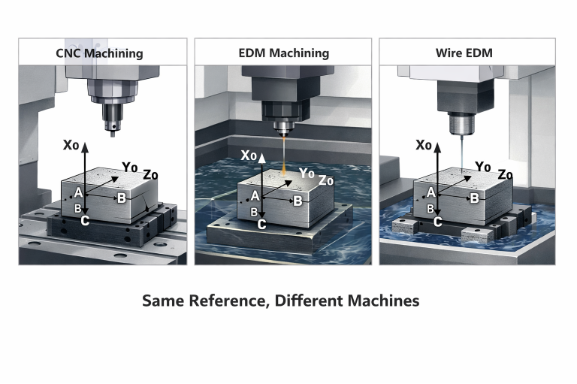
A reference system exists to prevent that. It allows a part to move between machines while preserving the same geometric intent. The machine changes, but the reference doesn’t.
How Reference Systems Preserve Part Geometry
At its core, a reference system defines how a part is known. Datums, orientation, and position are established once and then carried forward. Every subsequent operation works from the same understanding of the part.
Without a reference system, each setup becomes an interpretation. The operator re-finds zero. The fixture redefines orientation. Small differences accumulate with every step.
This is why realignment is one of the largest sources of error in multi-process work. Each time a part is re-clamped and re-indicated, geometry shifts slightly. Those shifts rarely appear immediately.
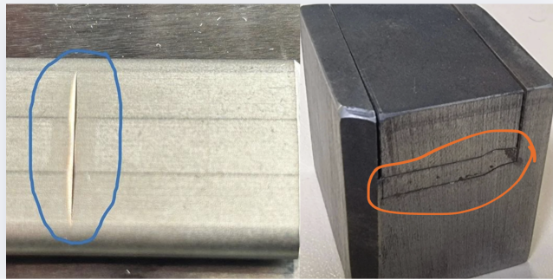
Instead, they show up later as misaligned features, inconsistent depths, or positional error. The problem didn’t occur in one machine. It occurred between machines.
Why EDM and Wire EDM Demand Consistent References
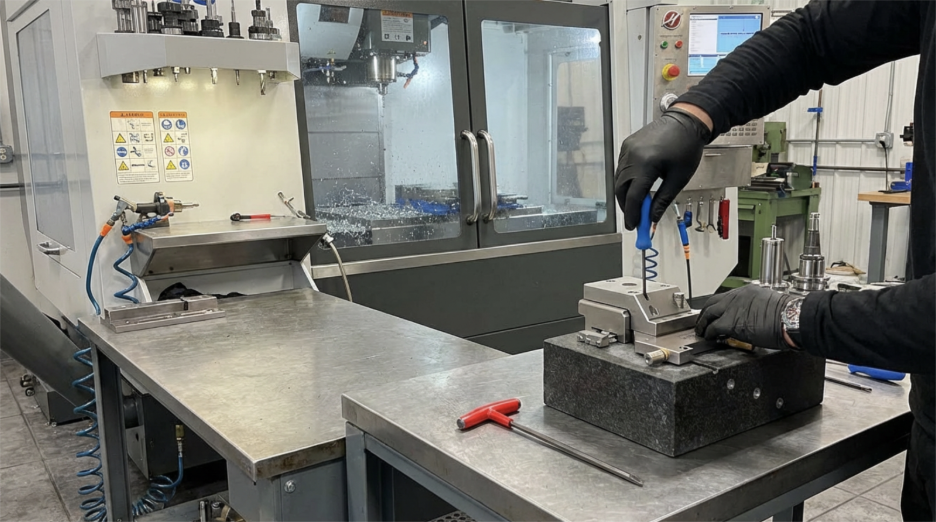
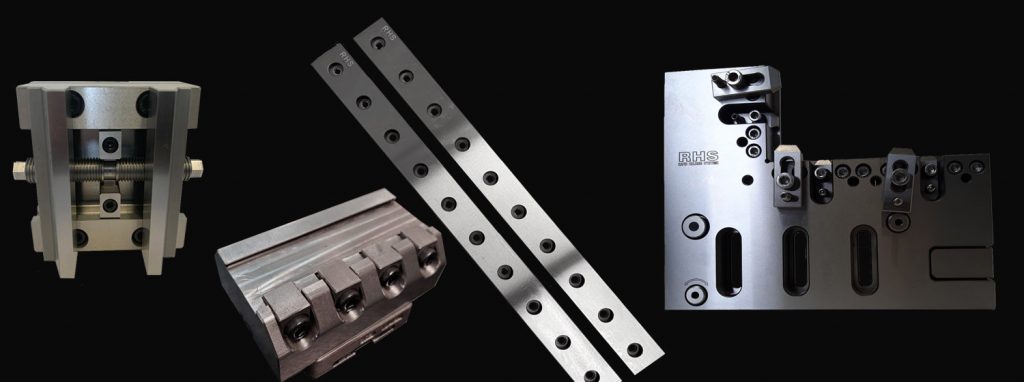
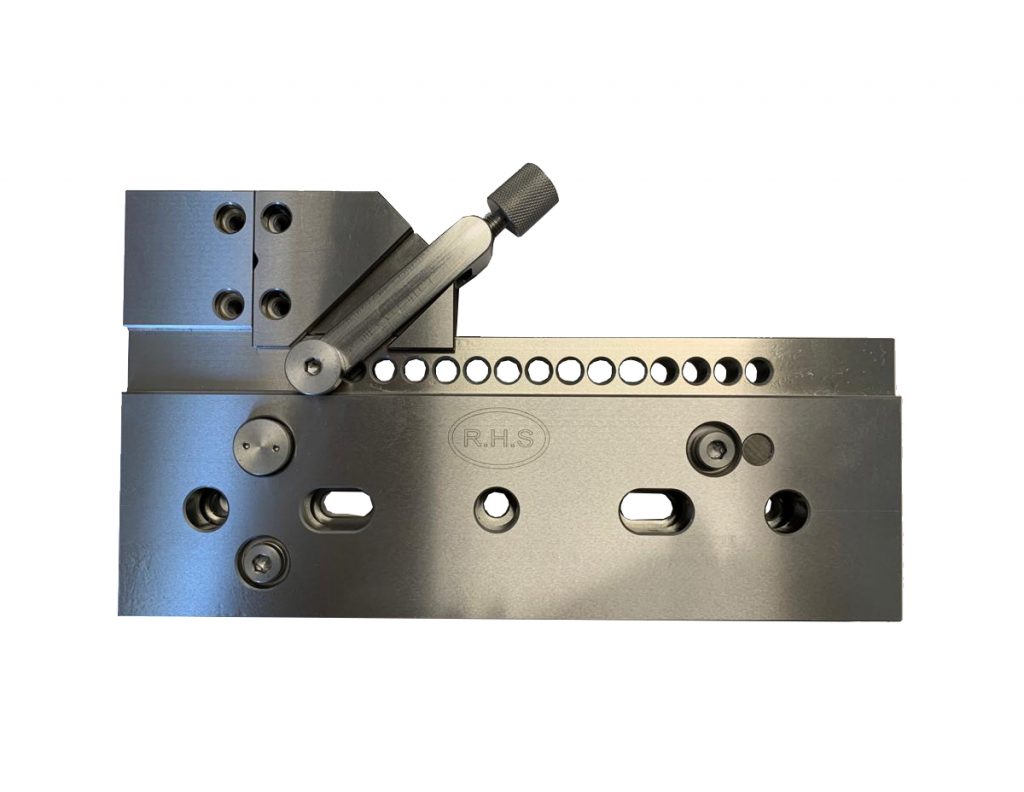
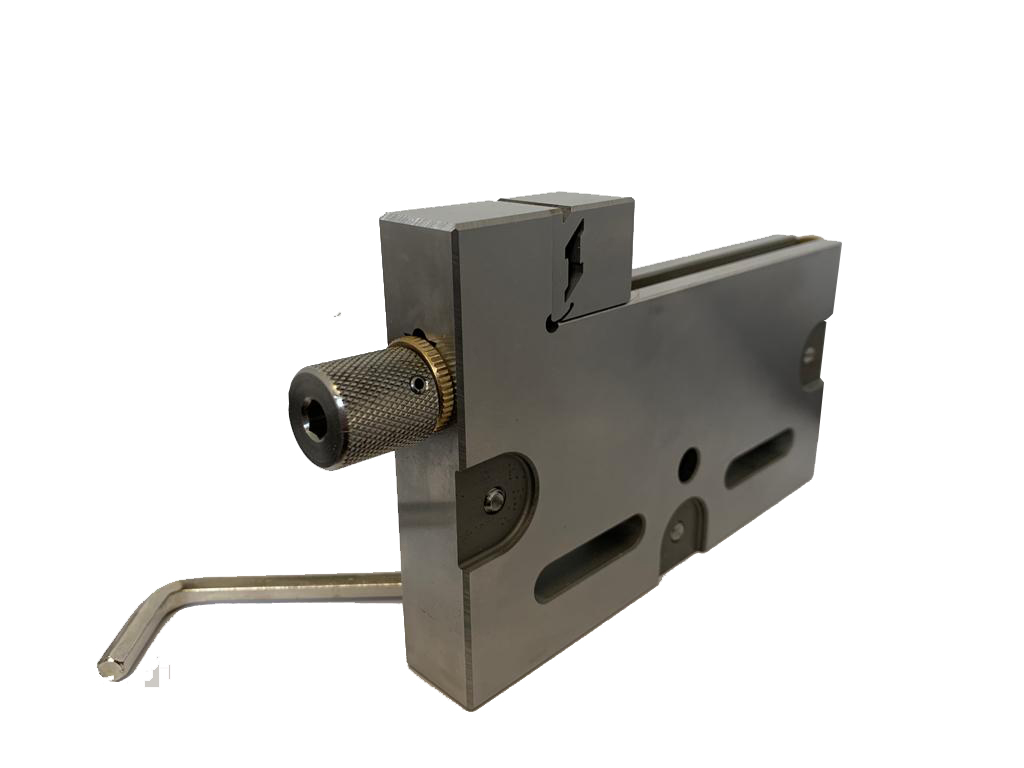
A reference system removes that risk by eliminating interpretation. The part loads the same way every time using self-centering vises or repeatable locating interfaces. The relationship between features is preserved across operations.
This becomes especially important when moving from CNC machining to EDM and Wire EDM. EDM doesn’t correct geometry. It follows it.
If a part arrives at EDM without a consistent reference, the process is already compromised. Any misalignment from previous operations is now locked in. Wire EDM simply makes it visible.
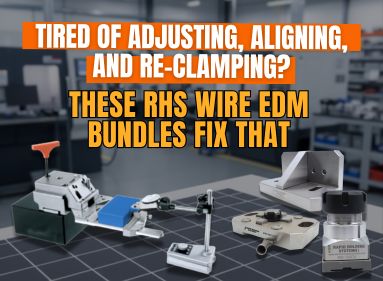
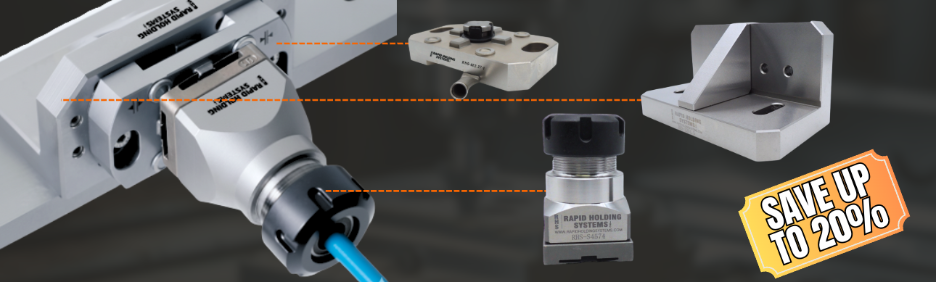
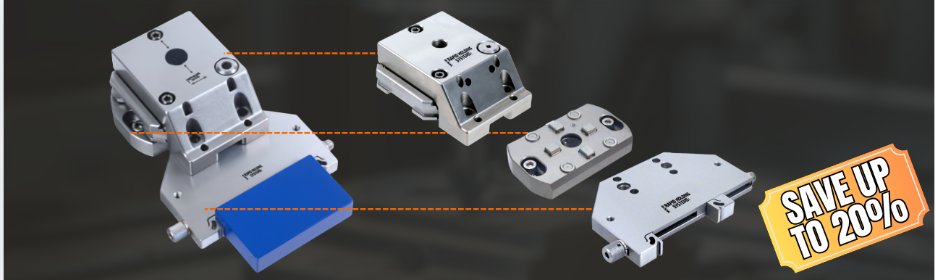
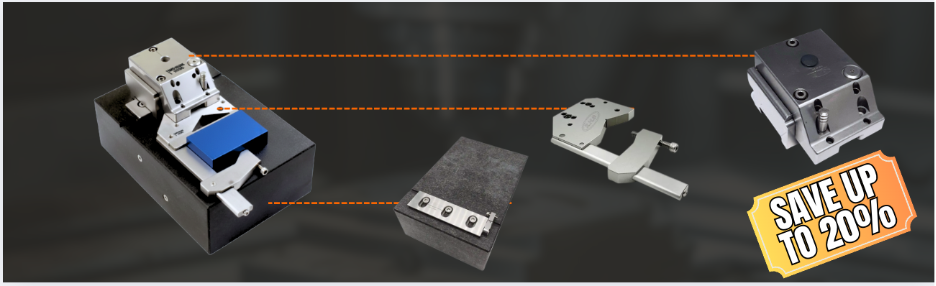
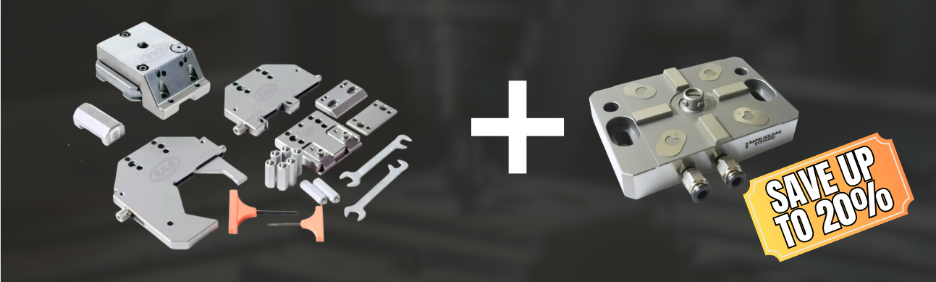
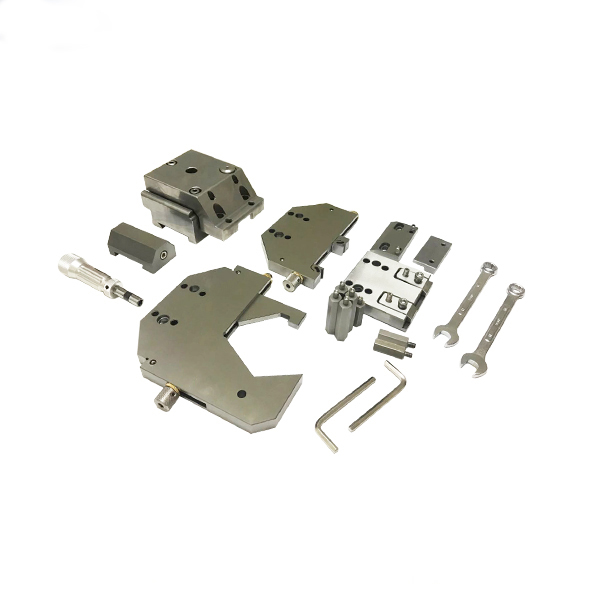
With a reference system, CNC roughing, EDM burning, and wire cutting share the same origin through System 3R-compatible tooling or EROWA-compatible tooling. No re-indicating. No reinterpretation of datums. No accumulated error.
How Reference Systems Change Shop Flow
This also changes how work flows through the shop. Setups become predictable when combined with zero-point bases and standardized interfaces. Programs rely on known geometry rather than correction.
Instead of correcting position at every stage, stability is designed in once. Accuracy becomes repeatable because the reference is consistent. Flow improves because alignment is no longer a bottleneck.
A reference system isn’t about speed. It’s about protecting geometry as the part moves. It turns multiple machines into one continuous process.
When alignment is preserved, variation has fewer places to enter. When variation is reduced, repeatability follows. That’s why reference systems quietly change everything.
About Rapid Holding Systems
At Rapid Holding Systems, we understand the reality of the shop floor. When setups fail, it’s not just a tool problem—it’s lost time, missed deadlines, and unnecessary stress. For over 20 years, we’ve specialized in precision-compatible workholding solutions for CNC, EDM, and Wire EDM operations. We work with manufacturers who demand repeatability, not excuses, providing proven compatibility with System 3R and EROWA systems backed by real-world application knowledge. From standard solutions to custom tooling, we help precision manufacturers achieve faster setups, improved accuracy, and the confidence that their tooling will perform consistently—every single time.
Want to solve your setup challenges? Reach out at [email protected]