
EROWA-Compatible Pallets: The Key to Flexible and Precise Manufacturing 

Modern machining demands fast tool changes and repeatable positioning. EROWA-compatible pallets help you automate workpiece setup and get the most out of your machine capacity. Here’s an overview of the EROWA system’s advantages — and how Rapid Holding Systems (RHS) delivers 100% compatible, affordable pallets. 

What Is the EROWA MTS System? 

The EROWA MTS is a zero-point clamping system built for versatility. It supports single workpiece clamping with one MTS chuck, or multiple workpieces using several chucks or base plates. 

The MTS 4.0 version takes things further with wireless digital status monitoring, so your machine control can display real-time chuck conditions. Only two pneumatic lines are needed to operate the base, and an integrated battery handles power supply. 

The MTS 3.0 variant prioritizes safety. It meets ISO 13849 (PLd-Cat 3) and includes a self-locking mechanism that keeps chucks closed even if pressure is lost. An air circuit also verifies that the spigot is present and locked before machining starts. 

MTS base plates are fully modular, available in 1, 2, 4, 6, or 8-chuck configurations — with custom solutions possible. This design dramatically cuts setup time: workpieces are palletized off the machine and loaded in seconds. The low build height accommodates large parts, contact surfaces are cleaned automatically during changeover, and existing vises, gauges, and fixtures can be reused. Pairing tombstones with MTS plates makes the most of your working space. 
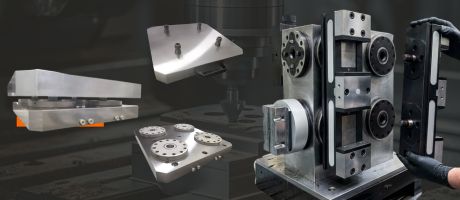
Technical Advantages of the MTS and UPC Systems 

The MTS system is open and flexible, supporting both single and multiple palletizing with repeatability better than 0.003 mm. Pallets can be indexed at 4 × 90°, use a spring-powered self-locking mechanism, and include built-in cleaning for functional surfaces. Pallet changes can be automated, and all control and monitoring run through just two air lines. 

The EROWA UPC system is designed for high precision across both large and small parts. Repeatability is below 0.002 mm, with 4 × 90° indexing and robust centering segments featuring a patented preload. An optional ITS chuck can be integrated at the center, and four fixed spigots act as supports and clamping devices. 

UPC aluminum pallets include hardened Z-supports and centering segments, making cost-effective custom solutions possible. The system has a low installation height, uses compressed air for opening and cleaning, delivers a pull-down force of 50 kN, and all components are sealed against coolant and chips. 

Examples of Our Compatible Pallets 

Rapid Holding Systems manufactures pallets fully compatible with EROWA. Here are some examples from our catalog: 

Product Dimensions & Material Key Specs 
Erowa MTS ER-033703 Compatible Pallet 240 x 400 400 × 240 × 33 mm; chrome steel Hardness 32–38 HRC, repeatability ≤ 0.005 mm, weight 24.8 kg 
Erowa MTS ER-033900 ER-033902 Compatible 6-fold Base Plate 560 × 400 × 55 mm; chrome steel 6 chucks, hardness 32–60 HRC, clamping force 15 kN, repeatability ≤ 0.005 mm 
Erowa MTS ER-038376 Compatible Pallet 400 x 400 400 × 400 × 40 mm; chrome steel Hardness 32–38 HRC, repeatability ≤ 0.005 mm, weight 20 kg 
Erowa UPC Pallet ER-107472 compatible 320 x 320 x 40 320 × 320 × 40 mm; steel + aluminum alloy Hardness 32–52 HRC, repeatability ± 0.002 mm 

These pallets integrate directly with MTS or UPC chucks. The precision, finish, and material quality make them suitable for both high-precision CNC machining and EDM operations. 

Why Choose Rapid Holding Systems? 

Rapid Holding Systems specializes in EDM and CNC clamping systems. Our pallets are 100% compatible with EROWA, made from high-quality steel, and tested to strict repeatability standards. Based in North America, we offer several key advantages: 

100% customer satisfaction guarantee — if a product doesn’t meet your expectations, we’ll make it right. 

No tariffs, delivery included — we ship directly to your door with no import duties. 

Lowest price guarantee — find an equivalent at a better price, and we’ll match or beat it. 

High-quality, affordable tooling — in-house engineering and premium materials deliver performance without the premium price tag. 

When you choose our products, you get reliable, precise pallets plus technical support, system selection guidance, and custom manufacturing options. Our online catalog makes it easy to find the right model for your needs. 

Ready to Boost Your Workshop’s Productivity? 

The EROWA MTS and UPC systems offer a robust, flexible foundation for machining automation. Self-locking mechanisms, automatic cleaning, digital monitoring, and micron-level repeatability mean parts change in seconds — and unproductive downtime drops dramatically. 

Rapid Holding Systems offers fully compatible pallets for both systems, backed by competitive pricing and local North American support. 

Contact us today. Our team can help you choose the right MTS or UPC configuration, prepare a quote, and arrange a demonstration. 
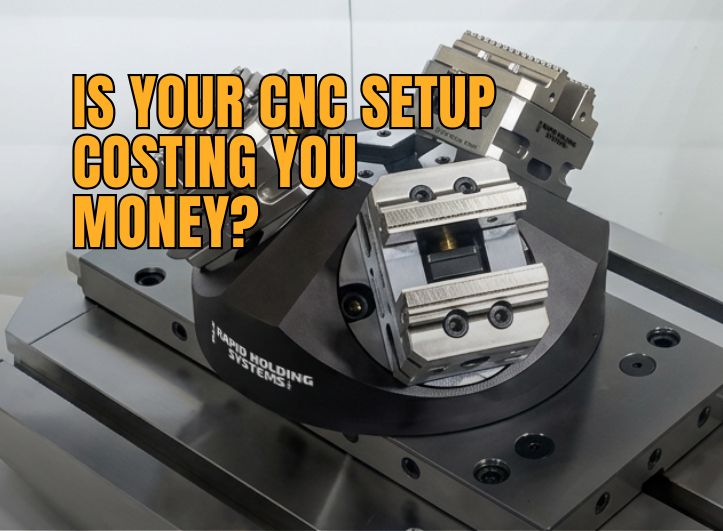
Is Your CNC Setup Costing You Money? The Problem Might Be Your Workholding 

There’s a mistake even experienced machine shops make: investing in top-of-the-line CNC equipment, then overlooking how the part is actually held in place. 

The result is always the same — vibration, dimensional errors, rework, and lost time. And the frustrating part? The problem isn’t the machine. It’s the workholding. 

Setup Time Is the Bottleneck Nobody Talks About 

In CNC and EDM manufacturing, cutting time is only part of the equation. The time spent mounting, adjusting, and re-verifying parts can eat up a massive chunk of total production time. 

A poorly chosen clamping system forces operators into a loop: manual adjustments, position checks after every changeover, and setups that should take seconds but take much longer. 

Precision workholding systems exist exactly to break that loop. 

What Makes a High-Precision Clamping System Different 

Not all vises are created equal. A self-centering vise, for example, doesn’t just hold the part — it centers it automatically, applying equal pressure on both sides. That translates into real repeatability across every part in a production run. 

Working with round, hexagonal, or irregularly shaped parts? A conventional vise will give you headaches. A self-centering vise won’t. 

And once you move into 5-axis machining or robotic loading, consistent part positioning stops being an advantage — it becomes a requirement. 

The Fastest Change You Can Make: Zero-Point Systems 

If there’s one technology that fundamentally changes setup logic on the shop floor, it’s the zero-point system. 

The concept is straightforward: instead of re-referencing the part from scratch every time, the system holds the reference for you. You swap the fixture in seconds, the machine already knows where the part is, and you keep cutting. 

The practical result? Setup time reductions of up to 90%. That’s not a marketing claim — it’s geometry. 

A Complete Line for Every Application 

Rapid Holding Systems (RHS) has built a product range that covers virtually any machining scenario: 

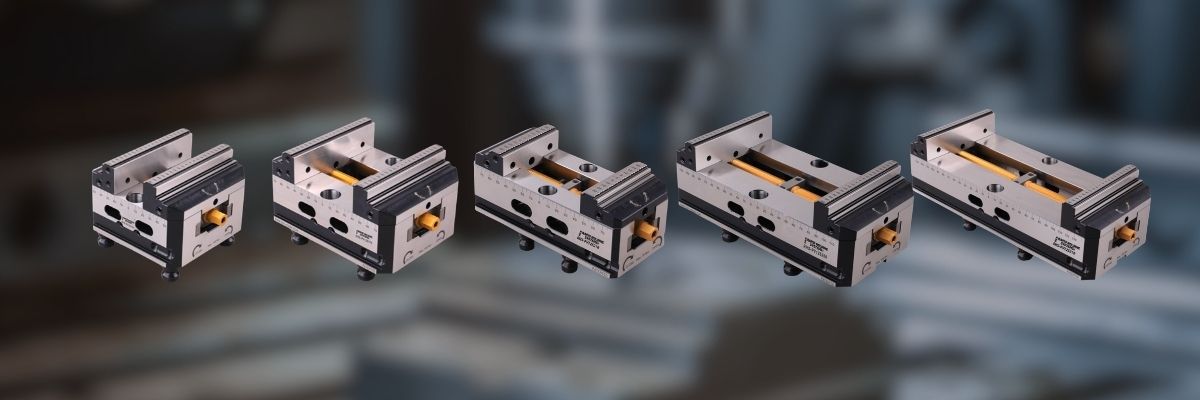
Self-centering vises — with repeatability down to 0.005 mm and stainless steel bodies. Ideal for batch production and irregular parts. 

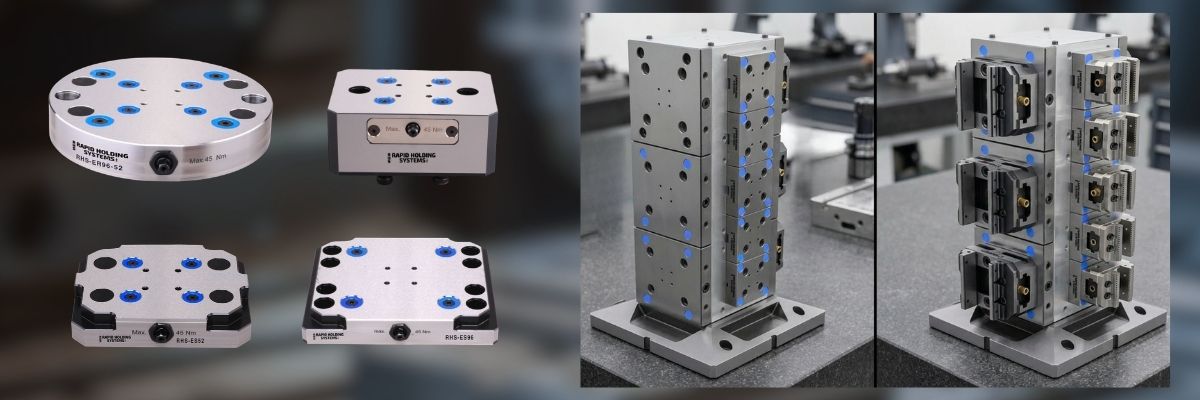
Zero-point bases and quick-change systems — swap fixtures in seconds while holding ±0.01 mm accuracy. Compatible with 3-axis, 4-axis, and 5-axis machining, EDM, and inspection. 

Modular vises — adapt to a wide range of part sizes and geometries, with fast configuration changes and consistent clamping pressure throughout. 

Pyramids and tombstones for 5-axis machining — precision-machined structures with multiple mounting surfaces, designed to machine several faces of a part in a single setup. 

Every component is manufactured from hardened stainless or alloy steel to handle heavy cutting forces while resisting corrosion and vibration. 

The Right Question Isn’t Whether It’s Worth It — It’s How Much You’re Losing Without It 

Every unnecessary setup hour has a cost. Every rejected part from a positioning error has a cost. Every time an operator has to re-verify a reference, that’s time and money gone. 

Precision workholding isn’t an expense — it’s the investment that makes the rest of your machinery investment actually pay off. 

Not sure where to start? RHS offers free consultations to help you identify the right system for your specific process. 

About Rapid Holding Systems  

At Rapid Holding Systems, we understand the reality of the shop floor. When setups fail, it’s not just a tool problem. It’s a waste of time, missed deadlines, and unnecessary stress. For over 20 years, we’ve specialized in precision-compatible workholding solutions for CNC, EDM, and Wire EDM operations. We work with manufacturers who demand repeatability, not excuses, providing proven compatibility with System 3R and EROWA systems backed by real-world application knowledge. From standard solutions to custom tooling, we help precision manufacturers achieve faster setups, improved accuracy, and the confidence that their tooling will perform consistently—every single time.  

Want to solve your setup challenges? Reach out at [email protected] 

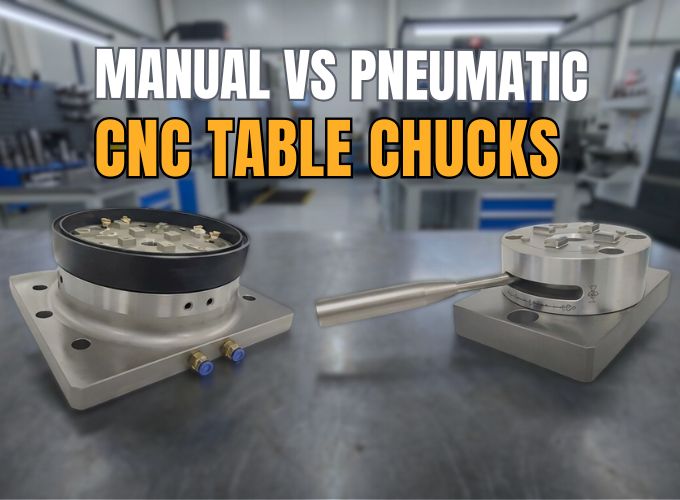
Manual vs Pneumatic CNC Table Chucks: Choosing the Right System 3R‑Compatible Setup 

Every minute spent re‑indicating a part is a minute not cutting. In production CNC environments that cost compounds quickly. Setup variability between shifts, inconsistent holding force during aggressive cuts and the inability to move work between machines without losing your datum translate directly into re‑work, scrap and lost tool life. A standardized pallet system solves these headaches by encoding the datum directly into the tooling. This article explains how System 3R‑compatible CNC table chucks work, how manual and pneumatic versions differ mechanically and how to select a setup that fits your shop. Where appropriate we’ve added links to the Rapid Holding Systems product pages so you can explore the exact products discussed. 

Why CNC repeatability breaks down 

Most shops start with vises. A vise gets the job done, but it does not give you a repeatable datum. Every time a part is removed and replaced the position changes. Every time a setup moves to a different machine you start from scratch. When a different operator runs the same job, the result may differ slightly from the previous shift. Those inconsistencies accumulate – they’re manageable in prototype work but a problem in production. Inconsistent clamping force during steel roughing leads to chatter, deflection and surface finish issues. The underlying issue is always the same: no fixed, repeatable datum in the workholding system. 

Understanding the System 3R pallet system 

A System 3R‑compatible pallet system works on a simple principle. The chuck mounts permanently to the machine table. The pallet carries the workpiece or fixture. When the pallet engages the chuck it locks onto a precise mechanical datum that repeats to within microns every time. The datum is established through the spigot on the underside of the pallet. As the chuck locks it pulls the pallet down onto the datum faces and clamps it. The result is a known repeatable X, Y and Z position on every insertion. A part can be removed for offline inspection, measured on a CMM and returned to the machine in the same position without re‑indicating. The same pallet can move between any machine fitted with a compatible chuck and locate accurately without additional setup work. 

At Rapid Holding Systems (RHS), System 3R‑compatible pallets and chucks follow these standards so shops can mix and match components from different suppliers. For example, their 54 mm pallet is available as a precision ground 54×54 mm unit with hardened faces and four index positions. You can see the product details here: 3R Compatible 3R‑651.7E‑XS pallet 54 mm Macro. For larger workpieces there’s a 70 mm pallet option such as the System 3R 3R‑601.1E‑P compatible pallet 70×70 mm, which provides a larger footprint while preserving the same datum geometry. 

Manual CNC chuck operation 

The traditional way to clamp a pallet into the System 3R chuck uses a mechanical screw. RHS offers a direct replacement for the OEM manual chuck: the System 3R 3R‑610.21 Manual Chuck Macro. It uses a short spigot on the pallet to locate the assembly, then an Allen key draws the pallet down onto the datum faces. Releasing the pallet reverses the process. This chuck requires no air supply and minimal maintenance. For low‑to‑medium volume production, standalone machines or shops where automation isn’t on the horizon, it’s a cost‑effective way to standardize the datum. You can read more about this chuck and order it online here: System 3R 3R‑610.21 manual chuck Macro. 

When to choose a manual chuck: 

  • You run jobs in small batches and change pallets infrequently. 
  • Your machines are standalone and not integrated into an automated cell. 
  • You value simplicity and want minimal infrastructure – no air lines or additional control signals are needed. 
  • You’re establishing a datum system for the first time and want an affordable entry point. 

Pneumatic CNC chuck operation 

As production volumes rise the manual Allen key becomes the bottleneck. A pneumatic chuck removes the wrench and replaces it with compressed air actuation. The System 3R 3R‑600.10‑30 compatible pneumatic table chuck MacroHP uses a longer spigot on the pallet to accommodate the internal air‑driven mechanism. The chuck body has two air inlets – one to clamp and one to release. Connecting shop air to the engage port draws the pallet onto the datum under pressure; connecting air to the release port frees it. The active actuation in both directions gives consistent clamping force and predictable cycle times. Robots and pallet changers can interface directly with the chuck’s pneumatic ports for fully automated loading. Learn more about this chuck here: System 3R 3R‑600.10‑30 compatible pneumatic table chuck MacroHP. 

When to choose a pneumatic chuck: 

  • You change pallets frequently and changeover time directly affects output. 
  • Your machine is part of an automated cell or uses robotic loading. 
  • You want to integrate pallet engagement with machine control logic or PLCs. 
  • You need speed and consistency to maximize machine utilization. 

54 mm vs 70 mm pallet systems 

Two common pallet sizes support System 3R setups for smaller workholding applications. Both sizes use the same datum geometry; the difference is footprint and holding force. 

54 mm pallets are often associated with graphite electrode machining because sinker EDM workflows favour a smaller pallet. However there’s no technical reason to limit them to graphite. A hardened 54 mm pallet like the 3R‑651.7E‑XS 54 mm Macro pallet can be used for steel components if the part size and cutting forces fall within its capability. This size is ideal for small parts, electrodes or fixtures where machine envelope and tool access are at a premium. 

70 mm pallets provide a larger contact area and higher holding force. A pallet such as the 3R‑601.1E‑P 70×70 mm Macro pallet is better suited for larger workpieces, heavier fixtures or more aggressive milling. The increased diameter distributes clamping loads and provides more stability during high‑feed machining. When selecting a pallet size consider part dimensions, fixture geometry and the cutting forces you expect; the material itself (steel versus graphite) is less important than those factors. 

What about the Macro Magnum? 

For heavy‑duty machining there is a larger format known as the Macro Magnum. Its 6.5 inch (165 mm) pallet distributes clamping force over a much wider area and can generate holding forces around 16 000 Nm. This makes it suitable for aggressive stainless steel or Inconel roughing on 3‑ or 5‑axis machines. RHS supplies Macro Magnum chucks with a slotted base plate to bolt directly to your table. If your parts exceed the limits of the 54 mm and 70 mm system or you need maximum rigidity, contact Rapid Holding Systems for options – the Macro Magnum chuck isn’t listed on the website yet but the team can quote it on request. 

Manual vs pneumatic: comparison summary 

Feature Manual chuck Pneumatic chuck 
Engagement method Allen key Compressed air 
Spigot type Short Long 
Actuation direction Screw tighten/release Active clamp & release ports 
Changeover speed Moderate Fast 
Air supply required No Yes 
Automation suitability Limited Full 
Best use case Low‑to‑mid volume, standalone machines High volume, automated cells 

Both systems use the same pallet datum and deliver repeatable location accuracy. The difference lies in how clamping force is applied and how well the chuck integrates into your workflow. 

Choosing the right System 3R‑compatible setup 

Ultimately your choice depends on production volume, changeover frequency and automation intent: 

  • Entry‑level shops should start with a manual chuck and a set of 54 mm or 70 mm pallets. The upfront cost is lower and you can standardize your datum without installing air lines. As your business grows, you can retrofit a pneumatic chuck onto the same table and reuse all pallets. 
  • High‑volume or automated cells benefit from the pneumatic chuck immediately. Fast clamping cycles and integration with robots or pallet changers keep spindles cutting instead of waiting on manual intervention. When paired with 70 mm pallets, the pneumatic chuck forms the backbone of a scalable production cell. 
  • Heavy‑duty 5‑axis machining may justify the Macro Magnum with its larger pallet and extreme holding force. Contact RHS to discuss your specific application. 

Pallet standardization resolves the repeatability problem at its source. When the datum is fixed in the tooling rather than re‑established at each setup, setup time drops, scrap decreases and machine utilization improves. System 3R‑compatible chucks and pallets from Rapid Holding Systems provide standardized datums in formats that suit a range of applications. Whether you start with a manual chuck and 54 mm pallets, upgrade to a pneumatic chuck with 70 mm pallets, or move to a Macro Magnum for heavy roughing, the underlying principle stays the same: get the datum right and everything else becomes easier. Explore the linked products above and contact Rapid Holding Systems if you need help choosing the best configuration for your shop. 

Workholding Maintenance Guide: How to Protect Your CNC and EDM Precision 

In precision manufacturing, we all talk about tolerances, stability, and repeatability. But there’s something many shops leave out of the equation: 

Maintenance of their clamping systems. 

It doesn’t matter if your workholding system was a well-planned investment, compatible with the most demanding standards. Over time, any component subjected to constant cycles, coolant exposure, metal particles, or pneumatic pressure starts to change: 

# Axes lose smoothness 

# Surfaces no longer seat properly 

# Springs stop applying consistent force 

# Fine dust affects repeatability 

All of this can happen without you noticing. Until you notice it on the machine. 

Maintenance Isn’t a Technical Luxury. It’s Part of the Process. 

In shops running CNC, EDM, or WEDM equipment, workholding tools aren’t accessories. They’re the origin point of precision. 

And when that point fails, everything else starts to suffer: setup quality, inspection results, delivery schedules. 

Regular maintenance of your clamping systems means: 

  • Preserving the repeatability your parts require 
  • Reducing scrap and downtime from invisible causes 
  • Ensuring every tool change performs like the last one 
  • Extending the life of your investment 

Basic Steps to Keep Your Workholding at 100% 

These steps apply regardless of which system you use: 

1. Deep clean every 3 to 6 months 
Remove coolant residue, contaminated grease, and accumulated fine dust. 

2. Use technical lubricants, not generic ones 
It’s not just about “greasing.” Apply lubricants designed to resist pressure and repetitive cycles without breaking down. 

3. Inspect springs, seals, and active surfaces 
Replace components showing wear. Failures rarely come from one thing. They come from small deviations adding up over time. 

4. Follow recommended assembly patterns 
There are technical reasons behind the proper order of component installation. Don’t improvise. 

Caring for What You Have is Part of Being a Precision Shop 

Investing in quality workholding  is only half the journey. The other half is keeping them in optimal condition. 

A well-mounted setup is useless if the holder doesn’t clamp properly. A perfect CAD model means nothing if clamping isn’t consistent between cycles. 

Practical Example: Step-by-Step Maintenance 

To help you put all this into practice, we’ve prepared a video showing a real maintenance example. In it, we demonstrate complete servicing of the: 

EROWA ER-007521 Compatible CNC 80 mm Square Pneumatic Chuck 

📽️ [Watch the video] 

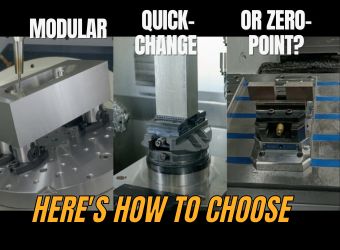
Modular, Quick-Change, and Zero-Point: What Each Approach Does—and When It Actually Makes Sense to Use It 

Workholding decisions shape more than setup time. They define how stable a process is, how parts move through the shop, and whether repeatability is designed in or constantly corrected. 

Modular, quick-change, and zero-point systems are often discussed together. But they solve different problems. Confusion usually starts when one approach is used to fix a problem it wasn’t designed for. 

Modular Systems: Flexibility First 

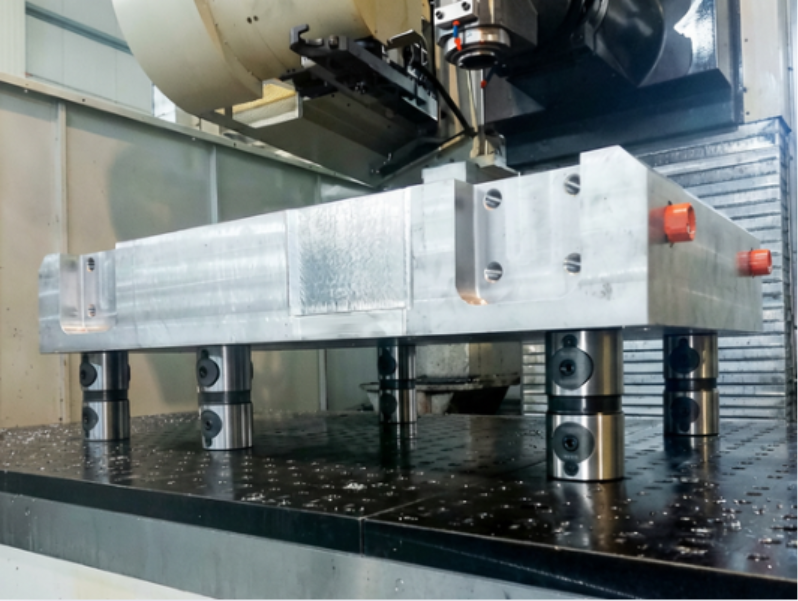
Modular fixturing is built around adaptability. Components can be rearranged to support different part geometries. This makes it ideal for high-mix, low-volume work. 

The strength of modular systems is design freedom. They allow quick configuration changes without custom fixtures. That flexibility, however, often comes at the cost of repeatable positioning. 

Modular setups work best when the primary challenge is part variation. They’re less effective when parts must be removed and reloaded with micron-level consistency. Flexibility alone doesn’t guarantee stability. 

Quick-Change Systems: Reducing Time at the Machine 

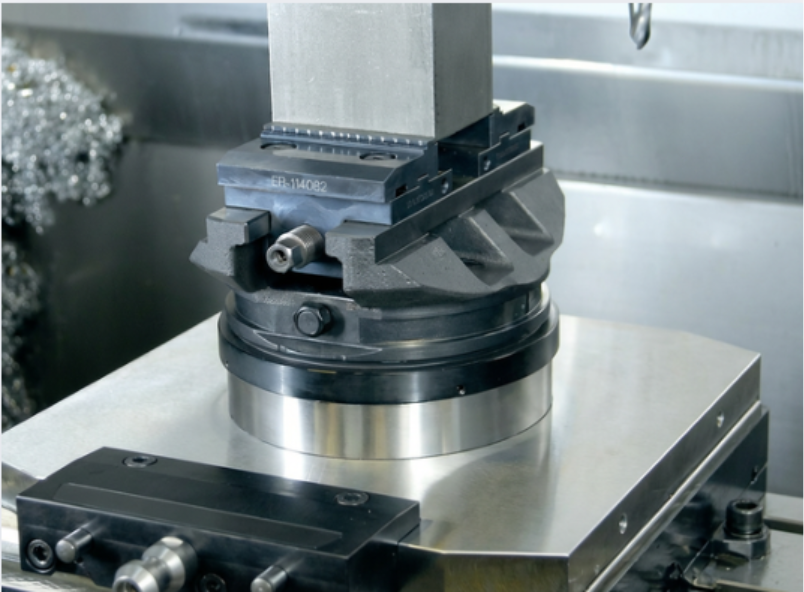
Quick-change systems focus on speed. Their purpose is to minimize downtime between jobs. Fixtures or pallets are swapped quickly so the spindle can run sooner. 

This approach is especially effective when setups are similar. The faster the exchange, the less interruption to production. What matters here is operational efficiency. 

However, quick-change doesn’t automatically ensure precision. If alignment must be re-established after each change, time is saved but variation remains. 

Quick-change solves when the machine cuts again. It doesn’t solve how consistently the part is positioned. 

Zero-Point Systems: Reference and Repeatability 

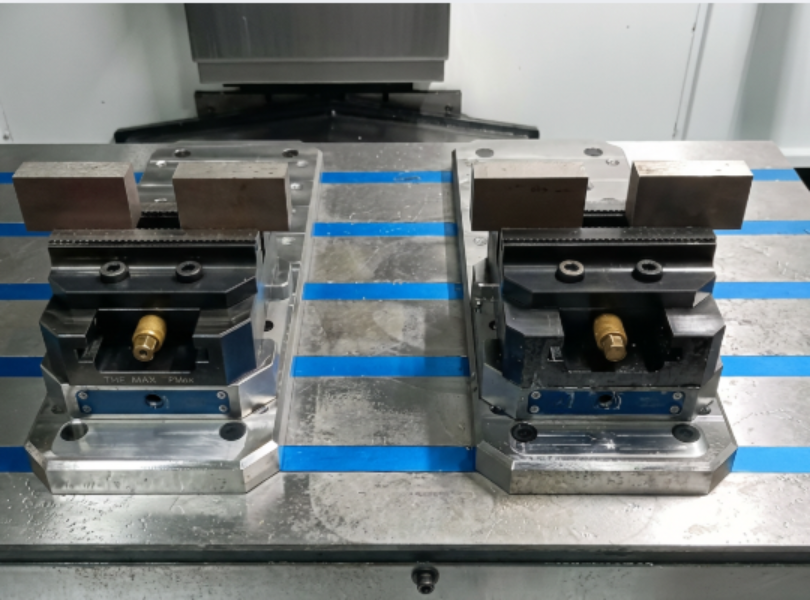
Zero-point systems are built around one idea: reference preservation. They define a physical origin that survives removal, transport, and reloading. When the part comes back, its position is already known. 

This is what makes zero-point systems different. They’re not about speed alone. They’re about geometric consistency. 

Zero-point systems are most valuable in multi-operation workflows. CNC to EDM. EDM to Wire EDM. Operations where re-indicating would otherwise introduce error. 

When repeatability matters more than flexibility, reference matters more than speed. 

Why These Approaches Are Often Combined 

In practice, these systems aren’t mutually exclusive. Many stable shops combine them intentionally. 

A modular fixture may sit on a zero-point base. Quick-change pallets may rely on a reference interface underneath. Each layer solves a different problem. 

This layered approach is where strategy matters more than hardware. The goal isn’t faster setup alone. It’s predictable, repeatable setup behavior. 

Choosing the Right Architecture 

The decision should start with the process, not the part. 

If the challenge is variety, modular systems make sense. If the challenge is downtime, quick-change helps. If the challenge is repeatability across operations, zero-point is foundational. 

Using the wrong approach often leads to constant adjustment. Using the right combination removes the need for correction altogether. 

At Rapid Holding Systems, much of the work revolves around this distinction. Not pushing one method over another, but helping shops design setup architectures that match how their parts actually move—especially when precision must survive multiple machines. 

Because in the end, setup systems aren’t about holding parts. They’re about controlling variation. 

What Is a Reference System and Why It Changes How Parts Move Between Machines: CNC → EDM → Wire EDM Without Realignment 

In many shops, every machine treats the part as if it were new. Each operation begins by re-establishing alignment, finding zero, and redefining position. That repetition feels normal, but it quietly introduces variation. 

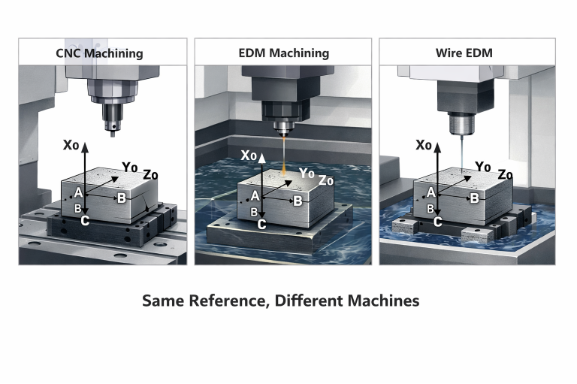
A reference system exists to prevent that. It allows a part to move between machines while preserving the same geometric intent. The machine changes, but the reference doesn’t. 

How Reference Systems Preserve Part Geometry 

At its core, a reference system defines how a part is known. Datums, orientation, and position are established once and then carried forward. Every subsequent operation works from the same understanding of the part. 

Without a reference system, each setup becomes an interpretation. The operator re-finds zero. The fixture redefines orientation. Small differences accumulate with every step. 

This is why realignment is one of the largest sources of error in multi-process work. Each time a part is re-clamped and re-indicated, geometry shifts slightly. Those shifts rarely appear immediately. 

Instead, they show up later as misaligned features, inconsistent depths, or positional error. The problem didn’t occur in one machine. It occurred between machines. 

Why EDM and Wire EDM Demand Consistent References 

A reference system removes that risk by eliminating interpretation. The part loads the same way every time using self-centering vises or repeatable locating interfaces. The relationship between features is preserved across operations. 

This becomes especially important when moving from CNC machining to EDM and Wire EDM. EDM doesn’t correct geometry. It follows it. 

If a part arrives at EDM without a consistent reference, the process is already compromised. Any misalignment from previous operations is now locked in. Wire EDM simply makes it visible. 

With a reference system, CNC roughing, EDM burning, and wire cutting share the same origin through System 3R-compatible tooling or EROWA-compatible tooling. No re-indicating. No reinterpretation of datums. No accumulated error. 

How Reference Systems Change Shop Flow 

This also changes how work flows through the shop. Setups become predictable when combined with zero-point bases and standardized interfaces. Programs rely on known geometry rather than correction. 

Instead of correcting position at every stage, stability is designed in once. Accuracy becomes repeatable because the reference is consistent. Flow improves because alignment is no longer a bottleneck. 

A reference system isn’t about speed. It’s about protecting geometry as the part moves. It turns multiple machines into one continuous process. 

When alignment is preserved, variation has fewer places to enter. When variation is reduced, repeatability follows. That’s why reference systems quietly change everything. 

About Rapid Holding Systems 

At Rapid Holding Systems, we understand the reality of the shop floor. When setups fail, it’s not just a tool problem—it’s lost time, missed deadlines, and unnecessary stress. For over 20 years, we’ve specialized in precision-compatible workholding solutions for CNC, EDM, and Wire EDM operations. We work with manufacturers who demand repeatability, not excuses, providing proven compatibility with System 3R and EROWA systems backed by real-world application knowledge. From standard solutions to custom tooling, we help precision manufacturers achieve faster setups, improved accuracy, and the confidence that their tooling will perform consistently—every single time. 

Want to solve your setup challenges? Reach out at [email protected] 

Setup Time Reduction: What You Really Gain When You Move from Internal Adjustments to External Preparation

In many CNC shops, setup time is treated as something to be minimized at the machine. The focus is often on doing the setup faster so production can begin. What rarely gets questioned is where that setup work is actually happening. 

Most setups include two very different types of work. Some tasks can only be done when the machine is stopped. Others don’t require the machine at all. 

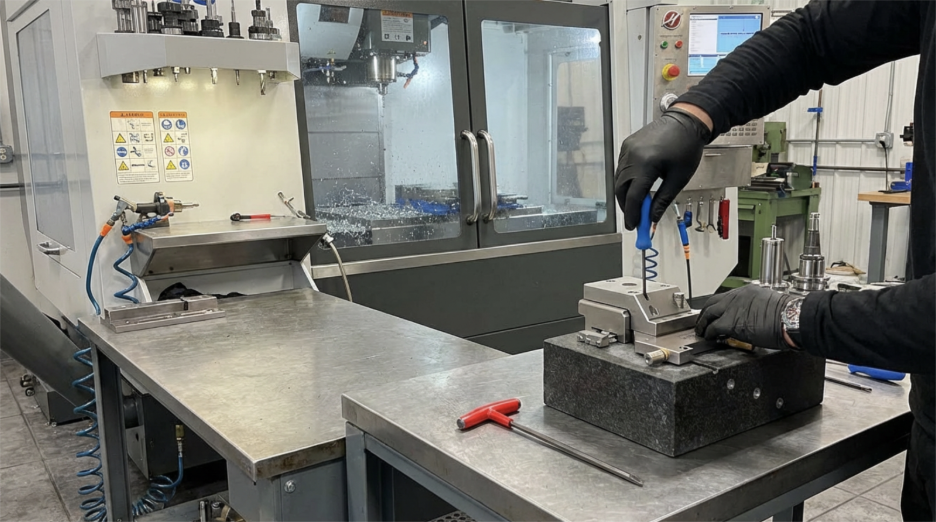
This is the distinction between internal and external setup. Internal setup happens with the spindle stopped. External setup can happen while the machine is still running. 

Why Most Shops Mix Internal and External Setup 

In many shops, these two get mixed together. Tools are measured at the machine. Fixtures are adjusted on the table. References are found while the spindle waits. 

From the outside, the setup looks efficient. From the machine’s perspective, it’s pure downtime. 

Shops that successfully reduce setup time don’t rush these tasks. They separate preparation from execution. That separation is what allows the spindle to stay productive. 

Where External Preparation Creates Real Value 

This shift is where external preparation starts to matter. Tooling, fixtures, and references are prepared in advance. When the machine stops, it stops only for work that truly requires it. 

This is also where standardized workholding and repeatable referencing play a role. When setups are prepared externally, they must load the same way every time. Systems designed for repeatability make that possible. 

At Rapid Holding Systems, much of our work focuses on enabling this transition. Not by speeding up the machine, but by making setups predictable before they reach it. External preparation only works when the setup itself is repeatable. 

How External Setup Changes Production Flow 

When preparation happens outside the machine, job changes stop disrupting flow. The next setup is already staged before the current job finishes. Production becomes smoother and easier to plan. 

This also reduces reliance on last-minute adjustments. Internal setups often force operators to compensate in real time. Those compensations quietly become part of the process. 

External preparation removes that pressure. Setups are prepared deliberately, checked, and reused the same way. Stability replaces improvisation. 

The Hidden Capacity You Already Have 

Another benefit is capacity that already exists but isn’t visible. Many shops invest in new machines to increase output. At the same time, existing machines spend significant time waiting. 

By moving setup work off the machine, that hidden capacity is released. Spindle time increases without changing cycle time. More parts are produced without adding equipment. 

This is why setup time reduction isn’t really about speed. It’s about relocating work to where it belongs. The machine should only do what only the machine can do. 

Why Repeatability Makes External Preparation Work 

External preparation depends on stable, repeatable setups. Without that foundation, setup work simply shifts location without real benefit. When repeatability is designed in, flow follows naturally. 

That’s the difference between reducing setup time on paper and improving how the shop actually runs. 

About Rapid Holding Systems 

At Rapid Holding Systems, we understand the reality of the shop floor. When setups fail, it’s not just a tool problem—it’s lost time, missed deadlines, and unnecessary stress. For over 20 years, we’ve specialized in precision-compatible workholding solutions for CNC, EDM, and Wire EDM operations. We work with manufacturers who demand repeatability, not excuses, providing proven compatibility with System 3R and EROWA systems backed by real-world application knowledge. From standard solutions to custom tooling, we help precision manufacturers achieve faster setups, improved accuracy, and the confidence that their tooling will perform consistently—every single time. 

Want to solve your setup challenges? Reach out at [email protected] 

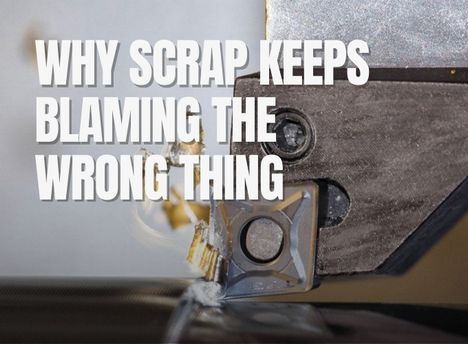
Why CNC Scrap Often Gets Blamed on the Wrong Thing 

When scrap appears in CNC machining, the first reaction is usually immediate. The tool gets blamed, the program gets adjusted, or the operator gets questioned. These are the most visible parts of the process. 

Often, the correction seems to work. A parameter change removes the scrap, production resumes, and the issue is considered solved. 

Until it happens again. 

Why Scrap Diagnosis Is So Difficult 

This cycle is common because scrap rarely shows its real cause right away. Instead, it appears intermittently. That inconsistency is what makes diagnosis difficult. 

Tooling is frequently the first suspect. Worn edges, broken inserts, or chatter are easy to see and easy to replace. But tools often reveal instability rather than create it. 

Operators are another common target. If scrap happens on one shift and not another, the conclusion feels obvious. In reality, operators are often compensating for underlying variation. 

Programs also take the blame. Offsets get adjusted, depths get corrected, and paths get modified. The part measures fine again, but the root problem remains untouched. 

Where the Real Problem Usually Hides 

In many cases, the real cause lives earlier in the process. Workholding that moves slightly under load. References that shift between setups. Clamping forces that change the part shape without being noticed. 

These issues don’t cause constant scrap. They cause occasional scrap. That’s what allows them to survive for so long. 

When scrap disappears after an adjustment but returns later, the process was never stable. The correction treated the symptom, not the system. Variation was managed, not removed. 

The Real Pattern Behind Intermittent Scrap 

Scrap that behaves inconsistently is rarely caused by a single component. It’s usually the result of small instabilities stacking together. Each one alone looks harmless. 

Understanding why scrap gets blamed on the wrong thing is a shift in mindset. It requires looking beyond what failed last and questioning what was assumed to be stable. 

Scrap is not always a tooling problem. It’s often a process problem showing up late. 

About Rapid Holding Systems 

At Rapid Holding Systems, we understand the reality of the shop floor. When setups fail, it’s not just a tool problem—it’s lost time, missed deadlines, and unnecessary stress. For over 20 years, we’ve specialized in precision-compatible workholding solutions for CNC, EDM, and Wire EDM operations. We work with manufacturers who demand repeatability, not excuses, providing proven compatibility with System 3R and EROWA systems backed by real-world application knowledge. From standard solutions to custom tooling, we help precision manufacturers achieve faster setups, improved accuracy, and the confidence that their tooling will perform consistently—every single time. 

Want to solve your setup challenges? Reach out at [email protected] 

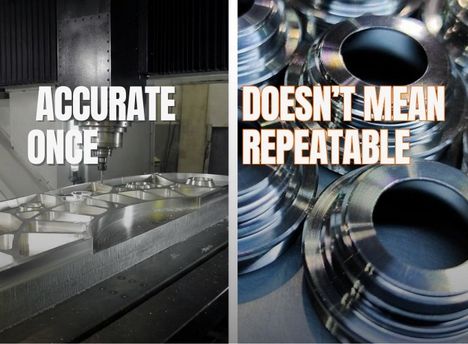
Accurate Once Doesn’t Mean Repeatable: Why CNC Setups Fail Over Time

In CNC machining, achieving tolerance once is often mistaken for proof of a good process. The part measures correctly, the setup looks clean, and production moves forward with confidence. At first glance, nothing appears unstable or worth revisiting. 

But here’s the problem: accuracy at a single moment doesn’t equal repeatability over time. Many setup-related issues don’t fail during the first run. They fail quietly, after the setup has already been accepted as “good enough.” 

The Pattern Most Shops Recognize 

A familiar pattern appears in many shops. The setup works, the part runs, and inspection signs off on it. Because nothing breaks, the setup is rarely questioned again. 

Weeks later, the same job comes back. This time, small adjustments are needed to make it work. Offsets are tweaked, depths are corrected, and the process moves on. 

Those adjustments slowly become normal. Instead of being seen as warning signs, they’re treated as part of the job. That’s often the first indicator that the setup was never truly repeatable. 

Where Repeatability Breaks Down 

Workholding is a common contributor. A part can be held securely enough to machine once, but not consistently enough to repeat. Uneven clamping forces, minor deformation, or micro-movement often go unnoticed early on. 

Alignment issues behave the same way. A reference that’s slightly off can still produce acceptable parts at first. As conditions change, those small errors begin to stack up. 

Cutting strategies can also hide instability. Aggressive parameters or mixed approaches may work on the first parts. As tools wear and heat builds, variation becomes unavoidable. 

The Hidden Risk 

The real risk isn’t scrap or machine alarms. The real risk is believing a process is stable because it worked once. That assumption quietly erodes repeatability over time. 

Repeatability comes from stability, not correction. Shops that prioritize consistency look beyond first-part accuracy. They evaluate setups based on how reliably they perform run after run. 

Accurate once is easy. Repeatable is where real control begins. 

About Rapid Holding Systems 

At Rapid Holding Systems, we understand the reality of the shop floor. When setups fail, it’s not just a tool problem—it’s lost time, missed deadlines, and unnecessary stress. For over 20 years, we’ve specialized in precision-compatible workholding solutions for CNC, EDM, and Wire EDM operations. We work with manufacturers who demand repeatability, not excuses, providing proven compatibility with System 3R and EROWA systems backed by real-world application knowledge. From standard solutions to custom tooling, we help precision manufacturers achieve faster setups, improved accuracy, and the confidence that their tooling will perform consistently—every single time. 

Want to solve your setup challenges? Reach out at [email protected] 

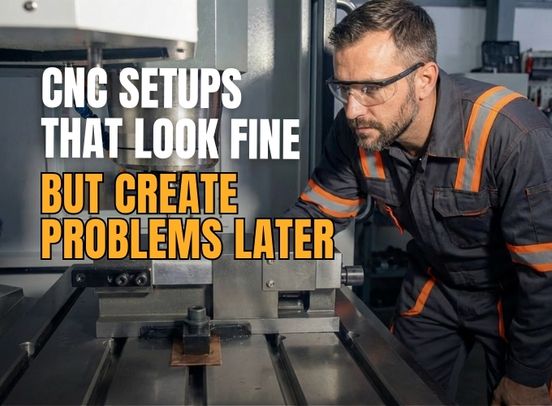
CNC Setups That Look Fine but Create Problems Later 

In CNC machining, many setup-related issues don’t come from obviously bad practices. They come from setups that look acceptable, run parts, and pass inspection at first glance. Because nothing fails immediately, these setups are rarely questioned. 

The machine cuts smoothly, the first part measures within tolerance, and production moves on. But over time, small inconsistencies start to appear. 

Dimensions drift, surface finish changes, or adjustments become routine on repeat jobs. 

Why “Good Enough” Setups Fail Over Time 

One common cause is workholding that’s “good enough” but not truly stable. Uneven clamping forces, minor part deformation, or slight movement under cutting load often go unnoticed. The setup holds the part, but not in the same way every time. 

Alignment issues follow a similar pattern. A fixture or reference that’s slightly off may still produce acceptable parts under limited conditions. As part size, tool reach, or cycle time increases, those small errors begin to compound. 

Cutting strategies can also contribute to delayed problems. Mixed milling approaches, aggressive parameters, or marginal tool condition may work initially. Over longer runs, they introduce vibration, deflection, and gradual loss of accuracy. 

The Hidden Cost of “It Runs” 

What makes these issues difficult is that they don’t announce themselves early. They show up as lost time, extra adjustments, or unexplained variation between identical jobs. By then, the setup has already been normalized in the shop. 

Understanding that “it runs” doesn’t always mean “it’s stable” is a key first step. Shops that focus on long-term repeatability look beyond first-part success. They question setups that work today but quietly create problems tomorrow. 

About Rapid Holding Systems 

At Rapid Holding Systems, we understand the reality of the shop floor. When setups fail, it’s not just a tool problem. It’s a waste of time, missed deadlines, and unnecessary stress. For over 20 years, we’ve specialized in precision-compatible workholding solutions for CNC, EDM, and Wire EDM operations. We work with manufacturers who demand repeatability, not excuses, providing proven compatibility with System 3R and EROWA systems backed by real-world application knowledge. From standard solutions to custom tooling, we help precision manufacturers achieve faster setups, improved accuracy, and the confidence that their tooling will perform consistently—every single time. 

Want to solve your setup challenges? Reach out at [email protected]